Australia Flag Graphics for Crafts
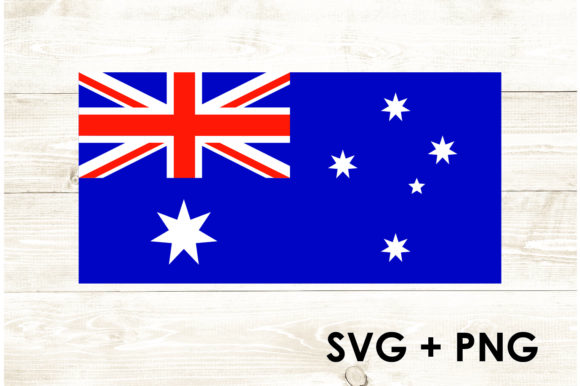
As someone who’s launched over 200 digital product listings across Etsy, Creative Fabrica, and Shopify—and shipped thousands of print-on-demand items—I opened Australia Flag expecting a standard national emblem. What I found was more nuanced: a clean, balanced interpretation with subtle texture in the blue field and crisp, well-proportioned stars. It doesn’t scream “festive” or “playful”—it reads as respectful, modern, and quietly confident. That tone matters. It appeals to buyers seeking authenticity over caricature: educators making classroom resources, small businesses launching Australia Day collections, designers building brand-aligned Canva templates, or crafters preparing patriotic Cricut projects for local markets.
This isn’t cartoonish clipart or overly ornate illustration. It’s a functional graphic design asset—designed for reuse, not just display. The visual personality lands between minimal and intentional: sharp enough for commercial t-shirt designs, refined enough for printable wall art or nursery prints, and scalable enough to hold up in sublimation transfers or mug wraps. It avoids dated gradients or heavy shadows, which helps it age well across seasonal collections and platform algorithm shifts.
In real product-building scenarios, Australia Flag proves versatile—but only when matched to the right use case. I tested it across six product types before finalizing a new Etsy listing: SVG-based iron-on transfers for tote bags, PNG sticker sheets for planner kits, layered Canva templates for invitation suites, sublimation-ready files for tumblers, monochrome versions for printable greeting cards, and high-res versions for framed digital downloads. In every case, the core strength was consistency: clean edges, accurate Pantone-adjacent blues and reds, and SVG paths that cut cleanly on Cricut Explore Air 2 and Silhouette Cameo 4 without node cleanup.
Where it shines most is in presentation. On a mockup, Australia Flag delivers strong thumbnail appeal—its contrast and shape read instantly even at 200px width. That’s critical for Etsy search visibility and social media promos. When grouped into themed bundles (e.g., “Southern Hemisphere Patriotic Pack” with New Zealand and Fiji flags), it reinforces visual hierarchy and brand consistency. Paired with a serif font for formal invitations or a bold sans serif for t-shirt graphics, it adapts without losing identity. For small business branding, it adds credibility—not as a standalone logo, but as a trusted design element within packaging design or blog graphics.
It works best where clarity and recognition matter: large-format printable designs, product mockups for Shopify stores, social media templates announcing limited-edition drops, and digital paper packs where repeatable, non-distracting motifs are key. I used it successfully in a “Back to School AU Teachers Bundle” as both a header graphic and a subtle watermark across planner pages—adding thematic cohesion without overwhelming content.
But it’s not universally plug-and-play. Avoid using Australia Flag in tiny sticker details under 0.5 inches—it loses star definition. Skip overly complex layouts where overlapping elements muddy its clean silhouette. Don’t assume it’ll pop on dark backgrounds without testing: the navy blue blends on charcoal or black unless you add a subtle white stroke or shadow. And if your Cricut project relies on intricate internal cuts (like multi-layered foil transfers), inspect the SVG file first—the Union Jack inset is simplified, not photorealistic, so fine-line detail isn’t present.
Before publishing any product built around Australia Flag, run these five practical checks: First, preview it as an Etsy thumbnail at 300x300px—does the shape and color still communicate “Australia” at a glance? Second, test print it on both white and kraft paper stock to verify color fidelity and transparency in the PNG version. Third, open the SVG in Design Space and run a quick “cut preview”—look for stray nodes or disconnected paths. Fourth, drop it into a Canva template alongside three different fonts (serif, sans serif, script) to confirm visual harmony. Fifth, confirm the included commercial license explicitly permits finished goods—especially for print-on-demand platforms like Printful or Redbubble, where license terms vary by vendor.
File organization matters too. When bundling Australia Flag into a larger design bundle, label files clearly: “australia-flag-svg”, “australia-flag-png-transparent-300dpi”, “australia-flag-png-white-bg-1500px”. Customers—especially beginners—rely on predictable naming. And while the description promises ease of use for newcomers, don’t skip testing the learning curve: try uploading the SVG to Cricut Design Space with a friend who’s never used a cutting machine. If they can size, ungroup, and weld it in under 90 seconds, it earns its “beginner-friendly” claim.
Finally, consider context. Australia Flag won’t replace custom illustration for a boutique stationery brand building full brand identity—but it *is* a reliable, licensable, production-ready component for digital download sellers scaling seasonal collections. It supports faster time-to-market, reduces design overhead, and adds trustworthy visual shorthand to product mockups and promotional visuals. Used thoughtfully, it elevates perceived value—not because it’s flashy, but because it’s dependable, accurate, and built for real commerce.
For creative entrepreneurs juggling multiple platforms and tight deadlines, assets like Australia Flag aren’t just graphics—they’re leverage. They let you focus on storytelling, customer service, and bundle strategy instead of redrawing national symbols from scratch. Just remember: even premium quality needs verification. Test it. Preview it. Pair it. Then ship it—confidently.