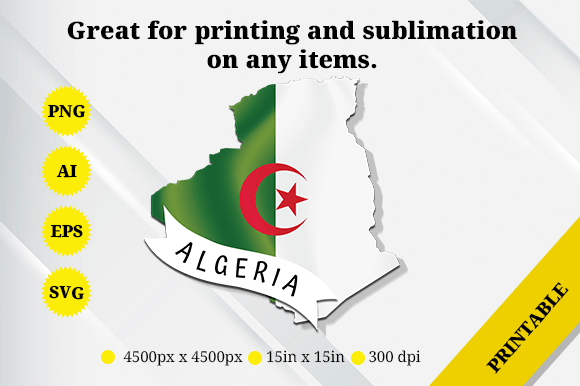
Algeria Map Flag Graphics for Crafts
First Impressions: Bold, Warm, and Unmistakably Authentic
When I opened the Algeria Map Flag file for a recent client project—a boutique Algerian spice shop in Marseille—I felt immediate resonance. The design carries warmth and geographic clarity without leaning into cliché. It’s not overly ornate, nor is it sterile or generic. Instead, it strikes a confident balance: vibrant but grounded, culturally rooted yet commercially versatile. For small business branding, that’s gold. It reads as friendly and approachable—ideal for food businesses, handmade soap brands, or children’s product lines—but also holds enough visual weight to anchor packaging for premium olive oil, artisanal tea, or seasonal home decor collections.
A Practical Fit for Real Local Business Use Cases
This graphic design asset isn’t just decorative—it functions. In our spice shop project, we used Algeria Map Flag across six touchpoints: front-of-pack labels on glass jars, hang tags for gift bundles, hero banners for Instagram Stories, printable recipe cards tucked inside orders, custom coasters for in-store sampling, and a subtle watermark pattern behind the brand’s monogram on thank-you cards. Each application reinforced regional authenticity while keeping the brand identity cohesive. That versatility is rare—and valuable—for local business owners juggling tight budgets and tight timelines.
Where Algeria Map Flag Builds Brand Strength
- Stronger first impression: On crowded farmers’ market shelves or Etsy listings, its distinct shape and saturated palette stop scrolling—especially when paired with clean typography.
- Better product recognition: Used consistently across labels and social media graphics, it becomes an intuitive visual shorthand for origin and craft.
- Clearer visual hierarchy: As a focal element on packaging design or posters, it naturally draws the eye before supporting text—no extra layout gymnastics needed.
- More consistent brand identity: Unlike clipart that feels disconnected, this illustration integrates smoothly with custom type and color systems we built for the client.
- Improved customer trust: Its authentic geographic accuracy (coastline, borders, proportions) signals attention to detail—subtly reinforcing credibility for heritage-based products.
Top Applications for Small Business Branding & Packaging Design
For handmade business owners and local brand builders, Algeria Map Flag shines brightest where cultural storytelling meets practical function. We’ve deployed it successfully as:
- A central motif on product labels for olive oil, harissa, and date syrup—scaled to sit beside ingredient lists without overwhelming them.
- An accent border on café menu boards and price lists for Algerian coffee roasters, adding rhythm without clutter.
- A background texture in Canva templates for social media graphics—layered at 15% opacity behind bold headlines for depth and context.
- A decorative frame around product mockups for Etsy or Shopify—giving digital previews instant regional character.
- A recurring motif on seasonal packaging: think limited-edition Eid boxes, Ramadan gift sets, or summer picnic kits featuring local ingredients.
Where to Proceed Thoughtfully
Like any strong graphic design asset, Algeria Map Flag demands intentionality. It doesn’t automatically suit every context. Avoid using it:
- In formal corporate branding—its warmth and illustrative tone can undercut serious B2B positioning.
- On very small labels (under 1.5 inches wide)—fine map details blur, weakening impact and legibility.
- Within ingredient-heavy layouts—where regulatory text dominates, it competes instead of complements.
- Against low-contrast backgrounds—its vibrancy relies on contrast; test rigorously on kraft paper, cream cardstock, or pastel fabrics.
- In luxury minimalist brands—its expressive energy may clash with restrained, monochromatic identities.
Designer Notes You’ll Actually Use
Before finalizing Algeria Map Flag in your project, run these quick checks:
- Test it on real packaging mockups—not just screen previews—to assess scale, bleed, and alignment.
- Convert to grayscale: Does it retain clarity? Crucial for black-and-white printing on tags or receipts.
- Preview at 25% size: Will it read on a 2-inch sticker or baby onesie label?
- Layer it over your brand’s core colors: Does it harmonize—or fight for dominance?
- Compare side-by-side with top 3 competitor packaging: Does it differentiate, or fade into the noise?
- Check print quality: At 300dpi and 15in x, it scales beautifully—but always request a physical proof before bulk runs.
- Inspect PNG transparency: The clean cutout allows seamless integration onto fabric, mugs, and textured substrates.
- Test font pairings: It works elegantly with serif fonts (for heritage gravitas), sans serifs (for modern clarity), and even soft script fonts (for handmade warmth)—but avoid overly decorative display fonts that compete.
- Confirm commercial licensing: This is non-negotiable for client work, retail packaging, or physical product sales—verify rights cover small business branding and resale use.
Final Thought: A Strategic Asset, Not Just Decoration
Algeria Map Flag isn’t filler—it’s functional storytelling. When applied with purpose across packaging design, social media graphics, and promotional visuals, it elevates how customers perceive authenticity, care, and origin. For creative entrepreneurs building local business brands—from candle makers in Algiers to French-Algerian patisseries in Lyon—it offers a rare blend: cultural specificity, production readiness, and emotional resonance. Used well, it doesn’t just decorate your products—it deepens their meaning.