Welder Flag: A Practical Embroidery Review
As someone who’s stitched hundreds of custom projects—from boutique aprons to Etsy baby onesies—I opened the Welder Flag embroidery file with a quiet kind of curiosity. Not hype, not hope—just the steady attention you give a tool before trusting it in front of a client or on a best-selling tote bag. This isn’t just another flag graphic. It’s a visual statement with grit, pride, and quiet craftsmanship baked into its lines—and that matters when you’re turning pixels into thread.
First Impression: Bold, Clean, and Built for Stitching
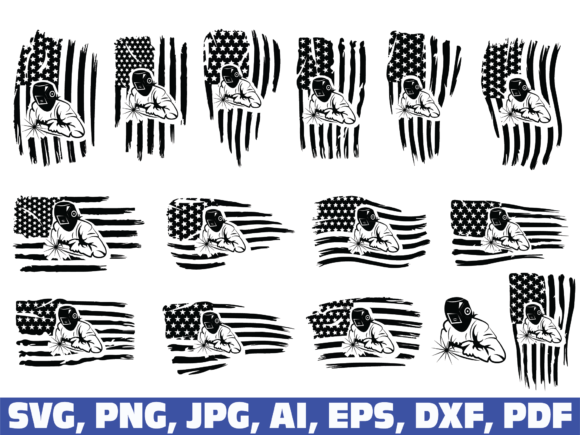
The Welder Flag lands with confident simplicity: strong geometric shape, centered emblem, balanced negative space, and a layout that breathes even at small sizes. It reads instantly as industrial yet respectful—no cartoonish flames or exaggerated sparks, just clean lines and intentional weight. That clarity is gold in machine embroidery design. I immediately pictured it stitched on a heavyweight cotton canvas tote for a welding supply shop, or as a subtle chest patch on a navy work shirt. The composition avoids tight corners, overlapping fine details, or fragile serifs—meaning fewer thread breaks, less digitizing cleanup, and smoother hooping.
Real-World Use: Where This Design Earns Its Keep
Last week, I prepped a batch of embroidered sweatshirts for a local tradesman’s appreciation event. I tested Welder Flag on midweight fleece—and it held up beautifully. The fill stitch areas were dense enough to read clearly but not so heavy they puckered the fabric. On a baby onesie? I’d scale it down to 3.5", use lightweight tear-away stabilizer, and choose soft pastel thread—not because the design demands it, but because its structure allows that flexibility without losing legibility.
It works especially well for products where authenticity matters: embroidered patches (great for iron-on backing), kitchen towels (stitch density holds up to laundering), and cap fronts (the horizontal emphasis fits curved surfaces naturally). As an Etsy seller, I’ve found designs like Welder Flag convert well—not because they’re flashy, but because they feel *earned*. Customers recognize craft, and this design signals respect for the trade it represents.
Where to Proceed With Care
This isn’t a one-size-fits-all embroidery file—and that’s honest, not limiting. On thin or stretchy fabrics like jersey tees, I’d add cut-away stabilizer underneath and reduce top tension slightly. Tiny hoop sizes (under 4" wide) may require trimming minor interior details manually—check the PDF preview first. Dark fabrics demand high-contrast thread; I tested Welder Flag in white on charcoal twill and loved how the satin stitch edges popped without bleeding.
Avoid layering it over seams or bulky pockets unless you’ve tested stabilizer thickness. And while the SVG and AI files are perfect for resizing in Cricut Design Space or Silhouette Designer Edition, remember: scaling up too far can exaggerate stitch jumps or thin out satin borders. Always verify your final size against your machine’s recommended max hoop dimensions.
Design Integrity Meets Customer Trust
What makes Welder Flag more than decoration is how it supports your brand’s credibility. When a customer orders a personalized gift—a father’s day pillow cover, a graduation cap, or a wedding apron for the groom who welds as a side hustle—they’re buying meaning, not just thread. This design delivers that quietly. No clutter, no forced whimsy. Just solid visual language that says, “I see your work. I honor your hands.” That builds trust—and repeat business.
For craft businesses, it’s also a smart digital embroidery file to bundle: pair it with a simple “Proud Welder” script or offer it as part of a tradesperson-themed collection. Because it’s delivered in SVG, DXF, PNG, PDF, AI, JPG, and EPS, you can easily create printable mockups for your Etsy listings or social ads—no extra vector tracing needed.
Practical Notes from the Hoop
- Always test first—run Welder Flag on scrap fabric matching your final project’s weight and texture.
- Check stitch density in your embroidery software. If fill areas look overly heavy on screen, reduce density by 5–10% before stitching.
- Review small details in the PNG preview—especially around emblem edges. What looks crisp on screen may need slight cleanup for smooth satin stitch flow.
- Try black-and-white mockups to gauge contrast on light vs. dark backgrounds before choosing thread colors.
- Use appropriate stabilizer: cut-away for knits, tear-away for stable wovens, and fusible for patches.
- Confirm licensing terms before selling finished items or reselling the digital embroidery file. This is a Graphics asset intended for Crafts—verify commercial use rights if scaling for wholesale or POD.
Final Thought: A Design That Does Its Job Well
Welder Flag won’t shout. It doesn’t need to. It’s the kind of embroidery file that earns its place on a well-worn apron, a gift-wrapped tea towel, or a small shop’s holiday collection—not through novelty, but through reliability, dignity, and quiet intention. For embroidery designers, Etsy sellers, and handmade product creators, that’s rare. It’s also valuable. Use it where craftsmanship matters most. Stitch it where pride shows—not loudly, but clearly.